
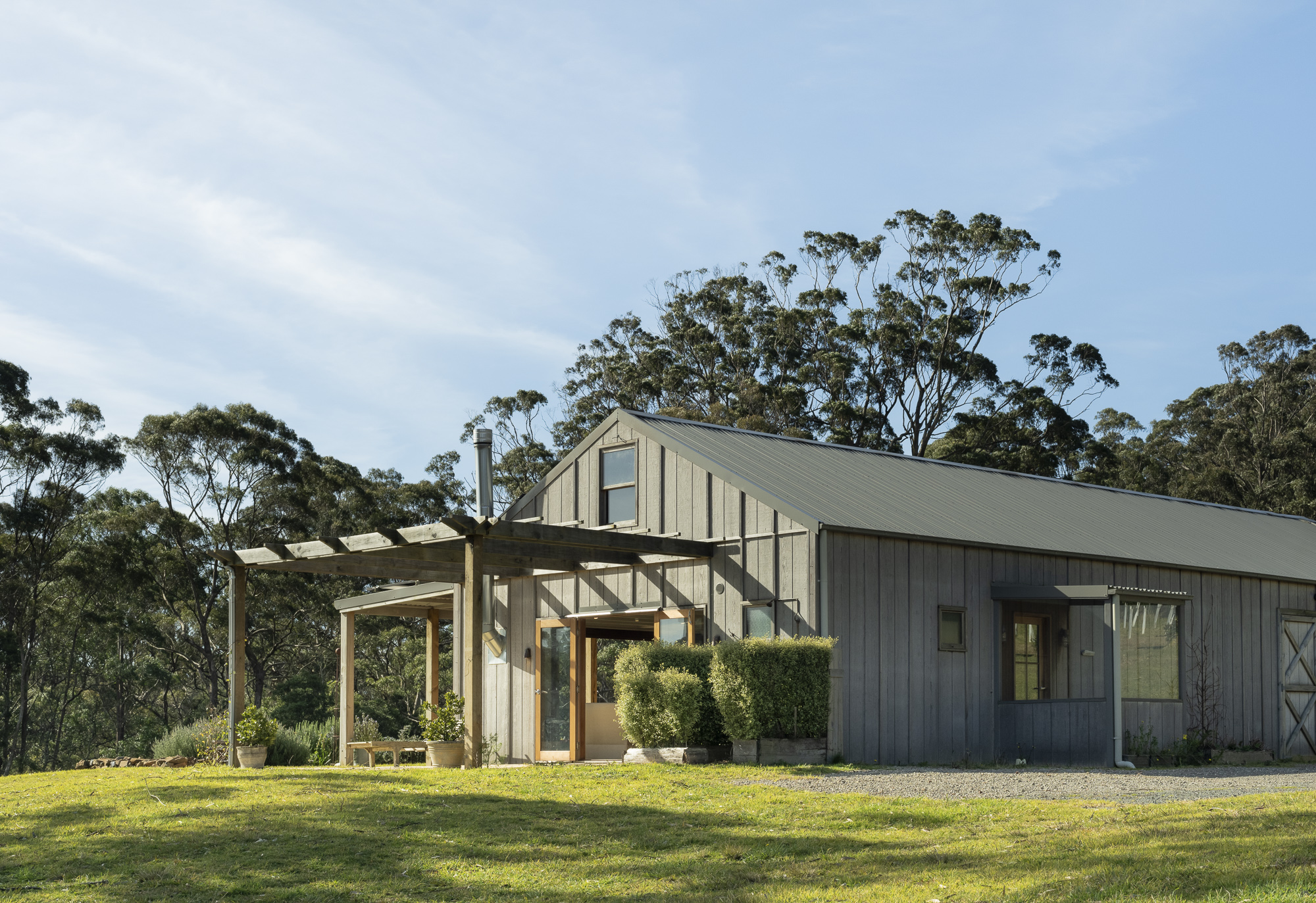
If you have rural land in NSW, it is likely that you will be able to add a large farm building – which includes barns, machinery sheds, shearing sheds, hay sheds, and storage outbuildings – without council approval.
The exemption is set out in Subdivision 16 of the State Environmental Planning Policy (Exempt and Complying Development Codes) 2008, specifically clauses 2.31 and 2.32.
It applies on rural zoned land (RU1, RU2, RU3, RU4, or RU6) and covers individual buildings up to 200m² in footprint, up to 10m in height for larger landholdings, subject to a number of siting and engineering requirements.
We’ve put together what you need to know below, but remember, rules can change at any time, so always check with your local authority or a certified planner.
In this article:
- What is classified as a “farm building” under NSW exempt development?
- What rural zones qualify for exempt farm buildings in NSW?
- How big can my exempt farm building be?
- How tall can my exempt farm building be?
- Does my exempt farm building need a professional engineer?
- What if my farm building is damaged by natural disaster?
- What rural land is excluded from exempt farm building development?
- What if my project doesn’t meet exempt farm building requirements?
- Where can I find the official NSW farm building exempt development rules?
- Working with Greenspan on a NSW exempt farm building
For broader council approval guidance covering all Australian states and territories, see Do I need council approval for my rural building?.
For NSW non-rural exempt development covering cabanas, sheds, and garden rooms, see Understanding NSW and ACT Exempt Development.

What is classified as a “farm building” under NSW exempt development?
The Standard Instrument defines a farm building as a structure whose use is ancillary to an agricultural use of the landholding on which it is situated. Per Note 1 to cl 2.31, this includes (but is not limited to):
- Hay sheds
- Machinery sheds
- Shearing sheds
- Storage tanks
- Silos
- Outbuildings
- Other agricultural structures
A farm building cannot be a dwelling under this exemption. Stock holding yards, grain silos, and grain bunkers have their own separate exempt development provisions under Subdivisions 16A and 16B respectively.
What rural zones qualify for exempt farm buildings in NSW?
Under cl 2.31(a), the farm building exemption applies on land in the following zones:
- RU1 Primary Production
- RU2 Rural Landscape
- RU3 Forestry
- RU4 Primary Production Small Lots
- RU6 Transition
Note that RU5 zoned land is not included. If your property is zoned RU5, the general exempt development provisions for sheds, cabanas, and garden rooms apply instead (20m² floor area, 900mm setback). If your property is zoned RU5, the general exempt development provisions for sheds, cabanas, and garden rooms apply instead (20m² floor area, 900mm setback) — see the NSW exempt development pathway for sheds, cabanas, and garden rooms for that pathway.
How big can my exempt farm building be?
Two limits apply: an individual cap and a cumulative cap.
Individual farm building footprint: maximum 200m² per building (cl 2.32(1)(d)).
Cumulative footprint of all farm buildings on the landholding (excluding grain bunkers), per cl 2.32(1)(e):
| Landholding area | Maximum cumulative footprint |
| 0 to 4ha | 2.5% of the landholding area |
| More than 4ha to 10ha | 1,000m² |
| More than 10ha | 2,000m² |
How “footprint” is calculated: Per cl 2.32(2), footprint means the area of ground surface occupied by the building, including walls, footings, and foundations, but excluding eaves, sunshade devices (including verandahs, awnings and porches), and access ramps. This is materially important – a 200m² building with a 1m perimeter eave and an access ramp is well within the cap despite its visible larger size.
How tall can my exempt farm building be?
Maximum height depends on landholding size and any scenic protection overlays, per cl 2.32(1)(a) and (b):
| Landholding | Maximum height above existing ground level |
| Less than 10ha | 7m |
| 10ha or more | 10m |
| Land identified as scenic and landscape values, or scenic protection area | 7m regardless of landholding size |
Ridgeline rule (cl 2.32(1)(c)) – if your landholding is more than 4ha AND the natural ground at any point within 100m of a ridgeline is at least 20m lower than the ridgeline, any farm building located within 100m of that ridgeline must be sited so its highest point is at least 5m below the ridgeline. This protects rural landscape character on hill sites.
What setbacks and siting rules apply?
The farm building must meet these siting requirements, per cl 2.32(1)(f), (g), and (h):
| Boundary type | Minimum setback |
| Road boundary | 20m |
| Other boundary (building footprint 0-100m²) | 10m |
| Other boundary (building footprint more than 100m² to 200m²) | 50m |
| Any other farm building (same or adjoining landholding) | 6m |
| Natural waterbody | 50m |
Does my exempt farm building need a professional engineer?
Yes. Under cl 2.32(1)(i), the farm building must be designed by, and constructed in accordance with the specifications of, a professional engineer. This is non-negotiable – even though the building is exempt from council approval, the engineering certification requirement remains.
Greenspan supplies engineered building drawings for purchase as part of any Cedarspan barn – speak to our team about your specific project.
What if my farm building is damaged by natural disaster?
Subdivision 15B of the Codes SEPP (cl 2.30C and 2.30D) provides a separate exempt development pathway for the repair or replacement of farm buildings damaged by natural disaster – including fire, flood, and storm damage.
The replacement building must be substantially similar in size, scale, and intended use to the building it replaces, and must be on the same landholding. This streamlined pathway helps rural landowners rebuild quickly after disaster events without going through the full DA process.
A Cedarspan barn is PreCrafted and delivered in just a few weeks, and can typically be installed in a week or two – should the worst happen, you can be back in business in no time at all.
What rural land is excluded from exempt farm building development?
Under cl 2.31(b) and (c), the farm building exemption does not apply on:
- RU5 zoned land
- Land containing a heritage item or draft heritage item
- Land in an environmentally sensitive area
- Land near an aerodrome or airport (within 2km) where a PANS-OPS surface is identified that may compromise the operation of the aerodrome
You can check your property’s planning status using the NSW Planning Portal.
What if my project doesn’t meet exempt farm building requirements?
If your proposed farm building exceeds the size limits, fails a setback, sits on excluded land, or is intended for habitation, you’ll need to use a different pathway:
- Complying Development Certificate (CDC) – a faster pathway than a full Development Application, available for buildings that comply with prescribed development standards.
- Development Application (DA) – required for projects that don’t meet either exempt or complying standards. Lodged with your local council.
For complex sites – including heritage, bushfire, flood, or environmentally sensitive land – we recommend engaging an accredited certifier or town planner before progressing. We can help put you in touch with a professional in your area.

Where can I find the official NSW farm building exempt development rules?
This policy can change without warning, so for the most current legislation, always refer directly to the source documents:
- State Environmental Planning Policy (Exempt and Complying Development Codes) 2008 – clauses 2.31 and 2.32 cover farm buildings, and Subdivision 15B (cl 2.30C and 2.30D) covers natural disaster replacement
- NSW Planning Portal – property-specific planning information
- Roads Act 1993 – section 138 requires the consent of the appropriate roads authority for any crossover and road access work
We always recommend you also speak to your local council to determine whether your individual project requires any additional permits and discuss your proposed development with your neighbours regardless of whether approval is needed.
Working with Greenspan on a NSW exempt farm building
Greenspan prefabricates timber farm buildings, barns, and cabins that are engineered and designed to comply with NSW exempt development standards across the Cedarspan range. Many of our standard configurations sit within the 200m² individual footprint and 7m/10m height thresholds, and our team can advise on which fit your specific landholding.
For a personalised quote or more information based on your landholding, requirements, and approval pathway, arrange a Callback from one of our Solutioneers.
Looking to build a council-exempt farm building in NSW?
Download our Design Price Guide to get started.
Already downloaded our Design Price Guide and ready to take the next step?
Let’s meet. Book a callback from one of our friendly team.